

No products in the cart.


Apitherapy – treatment with honey and bee pollen
The word apitherapy comes from Latin and Greek and is a combination of two words: “apis” – bee and “therapia” – treatment. In recent years, apitherapy has been rediscovered and reintroduced into everyday life. Knowledge about the health-promoting properties of bee products is becoming widely available. Each type of honey and other bee products differs in certain components. If you choose the right honey for your health, you will certainly notice a difference in your well-being.
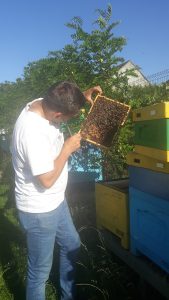
Table of contents:
Apitherapy – what is it and what does it involve?
Apitherapy is a form of treatment and prevention that uses products derived from bees. Knowledge about the health benefits of honey and bee products is becoming increasingly common and used in everyday life. Bees give us more than just honey – other bee products include bee pollen, bee bread (perga), royal jelly, and even bee venom.
Apitherapy in modern times
Rapid technological development, which relieves us from most physical activities, paradoxically makes us increasingly tired and exhausted, both physically and mentally. Lack of sufficient movement, physical activity, stress, and poor eating habits cause us to suffer more and more often from so-called lifestyle diseases. These include heart diseases, hypertension, atherosclerosis, allergies, depression, cancer, constipation, and many other issues affecting daily life.
We often acquire these conditions due to lack of awareness, neglect of our health, and ignoring the signals sent by our body because of lack of time, which leads to worsening health.
Do we have a chance to counteract this? Is there an alternative? Can we do something about it?
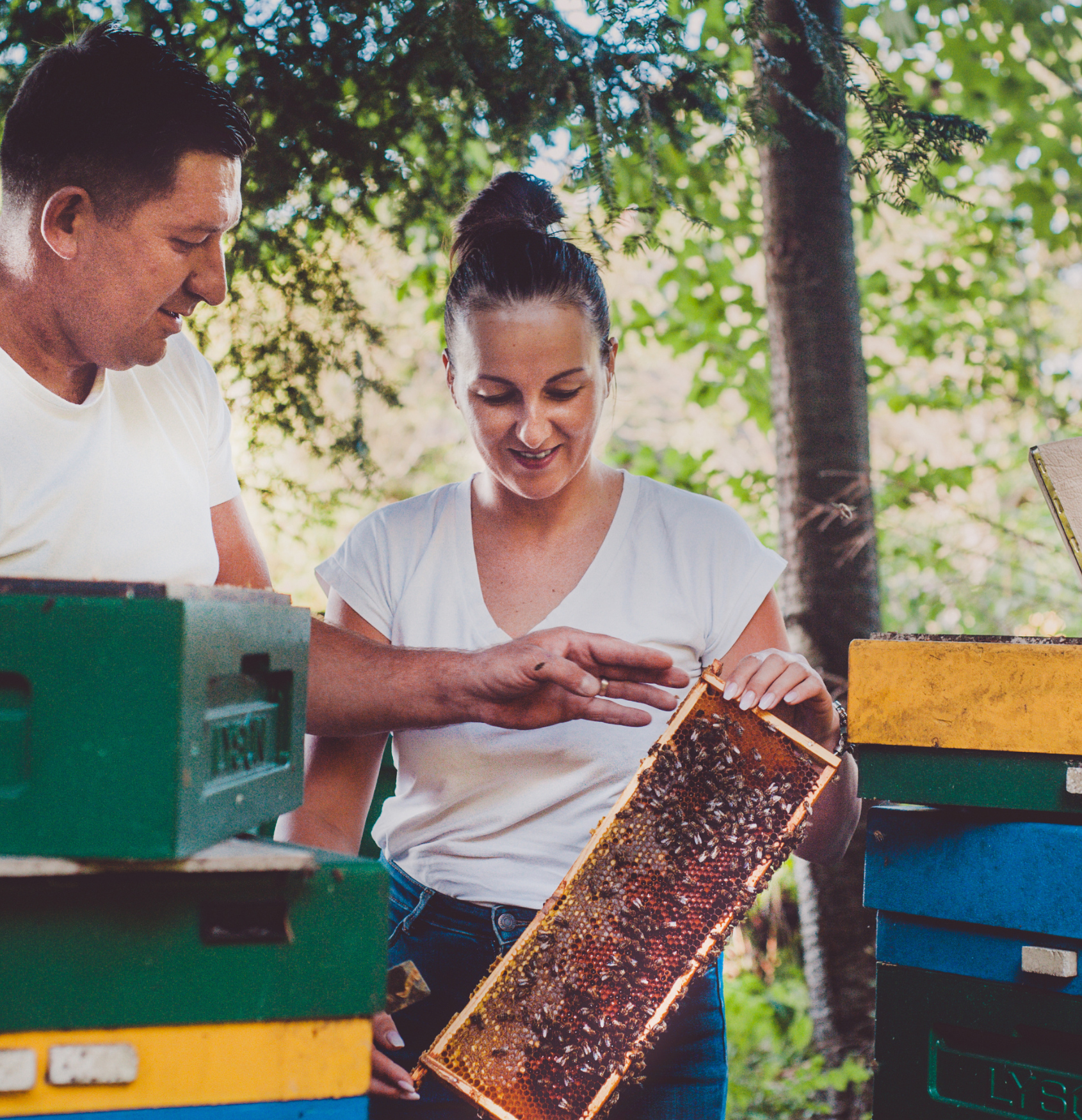
Of course we can! If we understand the importance of treatment with bee products, apitherapy will become something natural to us. We must understand that BEEKEEPER – BEES – BEE PRODUCTS are inseparable. The beekeeper, as the caretaker of bees, plays a crucial role. They ensure the well-being of bee colonies and obtain these valuable products in the highest quality, using knowledge and skills without harming the bees.
Now it is up to us to use bee products wisely and fully benefit from them, such as honey, flower bee pollen, royal jelly, bee bread, or bee venom. These should be incorporated into our daily diet, replacing dietary supplements, which we often consume in large amounts. Bee products are natural and are absorbed by the body much faster and more effectively – but more on that later…
Bee products can be divided into three groups:
- products brought into the hive – HONEY, FLOWER BEE POLLEN
- products brought and processed by bees – PROPOLIS, BEE BREAD (PERGA)
- products fully produced by bees – ROYAL JELLY, WAX, BEE VENOM
The most commonly used in apitherapy are flower bee pollen, honey, royal jelly, and wax.
Bee products – types and their importance for our health
- HONEY
Honey is the most commonly used bee product in everyday life. Depending on the type, honey differs in composition and effects. Honeys from our Miody Wadowickie apiary are distinguished by high quality and careful production to preserve everything nature offers in a jar.
- Honey contains vitamins A, B1, B2, B6, B12, C, E, P and trace elements such as potassium, phosphorus, iron, chlorine, calcium, magnesium, cobalt, folic acid, and biotin.
- Acetylcholine and potassium in honey improve heart performance.
- Simple sugars (mainly glucose and fructose) provide easily absorbable energy essential for proper heart function.
- Most importantly, honey has antiviral, antibacterial, antifungal, and antibiotic properties.
- It strengthens the body, boosts immunity, detoxifies, and has anti-allergic effects.
2. FLOWER BEE POLLEN
This is a unique bee product – the only complete, full-value food capable of sustaining human life. It contains about 40 elements in the form of mineral salts, including potassium, magnesium, iron, zinc, selenium, boron, silver, vitamins B1, B2, B3, B6, B12, C, PP, P, D, H, as well as folic acid, biotin, and pantothenic acid. It contains a large amount of protein (up to 20 g of protein in one tablespoon), essential for muscle tissue and for people with increased protein demand.
Bee pollen is excellent for reduced immunity after radio- and chemotherapy, during autumn and winter, and as a natural dietary supplement providing easily absorbable vitamins and minerals.
3. ROYAL JELLY
Royal jelly is a secretion of the hypopharyngeal glands of worker bees. It is produced only by young bees aged 3–14 days, well-nourished with bee bread. It positively affects the circulatory system, regulates blood pressure due to acetylcholine content, has anti-atherosclerotic properties, lowers blood sugar and cholesterol levels. It contains vitamins, saturated and unsaturated fatty acids, sterols, and many mineral salts.
4. PROPOLIS – BEE GLUE
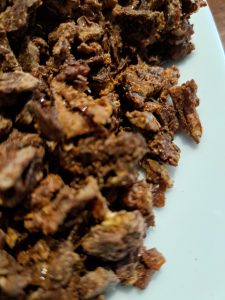
Propolis is another bee product processed by bees. It is made from resinous substances collected from damaged plant parts, shrubs, and trees. Mixed with flower bee pollen, beeswax, saliva, and other substances, it forms a compact yet plastic mass with a resinous aroma. Bees use it to seal and disinfect the hive.
Properties of propolis:
- antibacterial and antifungal
- reduces inflammation
- used in treating hard-to-heal wounds, bedsores, and skin ulcers
- products with propolis are used in rheumatological diseases, urinary and digestive system disorders, and preventively as a natural antibiotic
The components contained in bee products, including honey and pollen, are almost identical to those found in human blood, which makes them absorbable and accepted by the body at up to 99%. For example, iron from vegetables and fruits is absorbed at only 10–15%, while iron from honey and pollen is absorbed at up to 99%. That is why it is worth including bee products such as honey, pollen, and propolis in your daily diet. Try it – you will not regret it!

Leave a Reply