

No products in the cart.

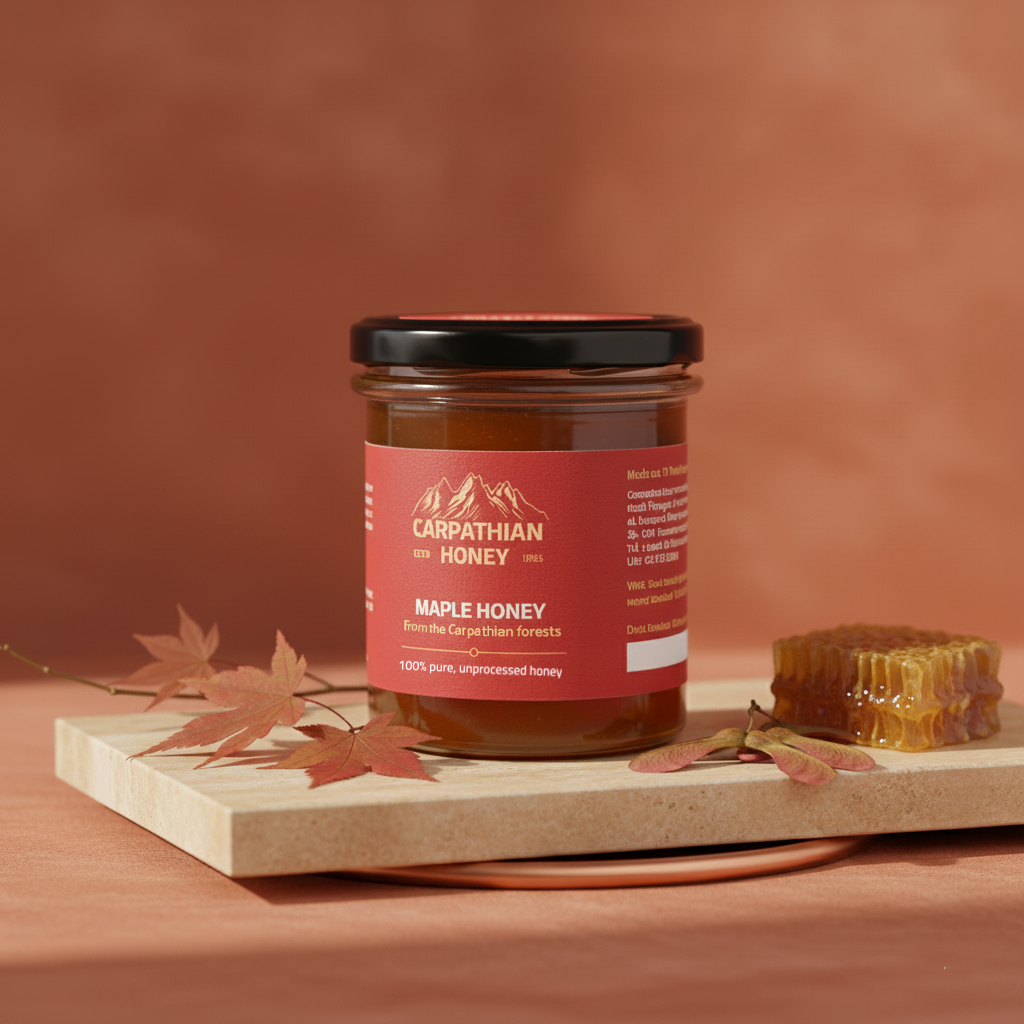
Maple Honey
€12,00
Color: from light yellow to amber
Taste: delicate candy-like taste
Aroma: subtle floral aroma
Crystallization: within a few months
Uses: removes toxins from the body, supports blood formation, helps fight inflammation and infections.
Description
Maple honey is a spring honey harvested in April or May, depending on how quickly nature develops in spring. It comes from maple trees such as sycamore maple, field maple, and Norway maple. It is a rare honey in Polish apiaries.
The honey’s color ranges from light yellow to amber. After crystallization, it becomes lightly yellow with shades of gray, sometimes light green.
It crystallizes after a few months into a slightly firm consistency. It is very easy to cream and crystallizes into fine crystals.
The flowering period of sycamore maple coincides with the intensive development of bee colonies. In addition, maple nectar has a high content of protein and B-group vitamins, which significantly supports faster rearing of new worker bees. Our natural maple honey comes from the Beskid Mały region and the Wieliczka Foothills. These areas are a natural habitat of tree stands characteristic of the Western Carpathians.
Maple honey – properties:
- easily digestible honey,
- helps remove toxins from the body,
- supports blood formation,
- helps fight inflammation and bacterial infections,
- adds vitality and energy,
- a source of vitamins B and C,
- contains trace elements such as potassium, magnesium, calcium, and iron,
- may be helpful in allergies and hay fever.
How is maple honey made?
Maple honey is a natural honey occurring in nature. Bees produce it mainly from several maple species around the turn of April and May: Norway maple, sycamore maple, and field maple.
What does maple honey taste like?
Maple honey has a delicate, sweet, lightly caramel and candy-like taste, reminiscent of maple syrup, with a subtle aroma of maple blossoms.
What are the benefits of maple honey?
Maple honey is valued for its cleansing effects, digestive support, and immune-strengthening properties. It is recommended for colds, anemia, and states of physical and mental exhaustion, and its easy digestibility makes it suitable for people with digestive issues.
How to use maple honey in the kitchen?
Maple honey is excellent for everyday use thanks to its taste and aroma. It can give any drink a unique floral note and is ideal for tea or warm milk. However, remember that the drink temperature should not exceed 40°C. It can also be added to desserts, oatmeal, or smoothies, and used as an ingredient in sauces and marinades.
What minerals and vitamins does maple honey contain?
Maple honey contains B vitamins (B1, B2, B6) as well as vitamin C and PP. It is also rich in antioxidants and minerals, including potassium, magnesium, calcium, and iron.
Is maple honey good for children?
Yes, maple honey can be good for children thanks to its delicate taste, its richness in vitamins and minerals, and its easily digestible sugars, making it a good energy source and supportive food. However, it should only be given after the age of 1 year, because infants under one year do not have the ability to process botulinum spores that can occur in bee products.
Can people with allergies consume maple honey?
Maple honey may be helpful for allergy sufferers, especially those with hay fever, because it contains small amounts of maple pollen that may act like a natural “vaccine,” gradually supporting the body’s adaptation. However, like any nectar honey, maple honey can also cause allergic reactions, especially in people sensitive to flower pollens. Therefore, allergy sufferers should be cautious, starting with small amounts and observing their body’s response.
Is maple honey beneficial for people with anemia?
Due to its iron content and other components, maple honey may support blood formation, which is why it is recommended for anemia and low red blood cell counts. It may also support blood cleansing by helping remove toxins from the body.
Does maple honey help with colds and infections?
Yes, maple honey can help with colds and infections thanks to its anti-inflammatory, antibacterial, and antioxidant properties. It may soothe sore throat and cough and support the immune system. Although it is not a medicine, it can be used as natural support for symptoms and prevention, and it provides easily absorbed energy.

Reviews
There are no reviews yet.